If you’re shopping for an affordable smartphone in 2025, you’ve likely come across three names that dominate the budget segment: Itel, Tecno, and Infinix. All three brands are owned by Transsion Holdings, a Chinese multinational that has mastered the art of delivering feature-packed phones at wallet-friendly prices. But here’s the catch—while they share the same parent company, each brand targets different audiences with distinct philosophies.
So which one deserves your hard-earned dollars? Let’s break down the key differences to help you make an informed decision.

Understanding the Transsion Trio
Before diving into comparisons, it’s important to understand the positioning of each brand. Transsion Holdings designed these brands to serve different market segments, much like how Volkswagen Group operates Volkswagen, Audi, and Porsche.
Itel sits at the entry level, targeting first-time smartphone users and those on the tightest budgets. Tecno occupies the middle ground, offering better specs and features for users willing to spend a bit more. Infinix aims at the upper budget segment, focusing on performance enthusiasts and young consumers who want flagship-like features without the flagship price tag.
Price Range: Where Your Money Goes
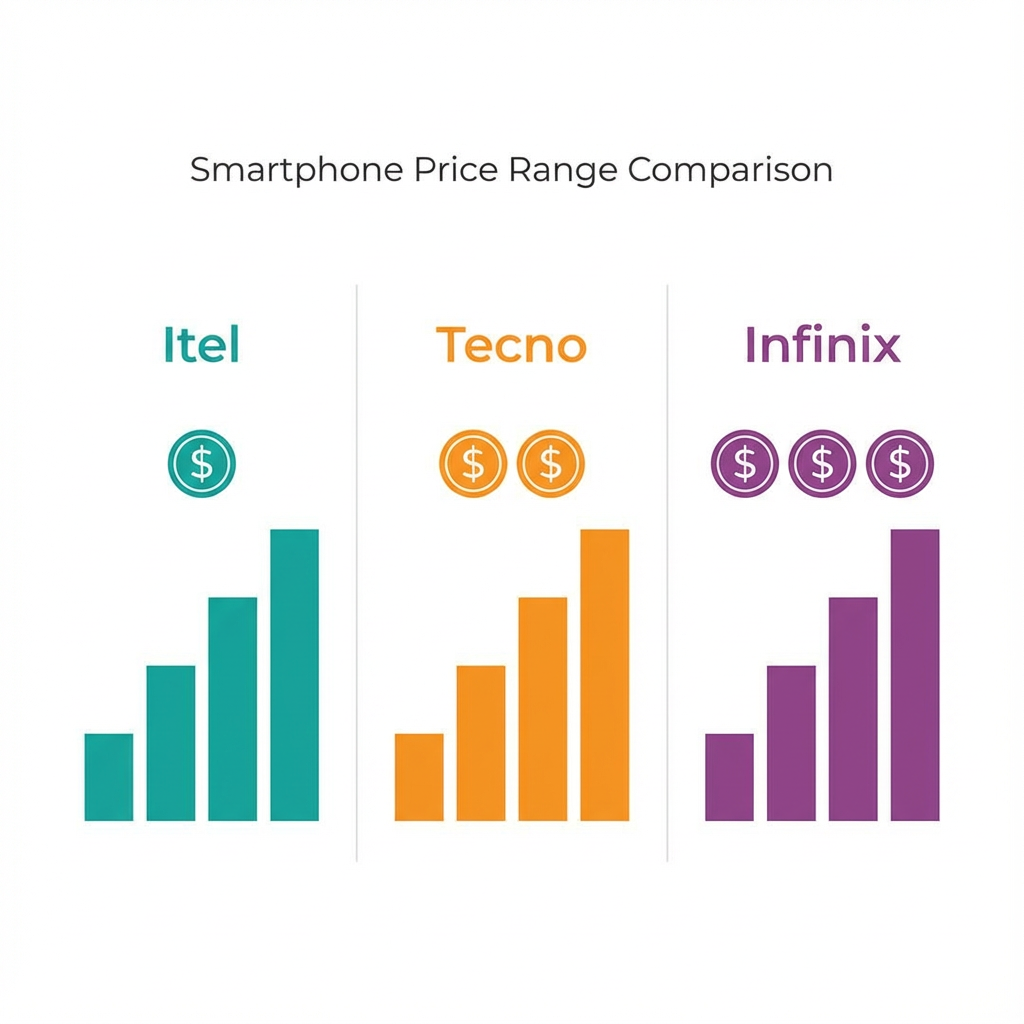
The most obvious difference between these brands is pricing. Itel phones typically range from $50 to $150, making them accessible to nearly everyone. These devices prioritize essential features—calling, texting, social media, and basic photography—without the bells and whistles.
Tecno devices generally fall between $100 and $300, striking a balance between affordability and capability. You’ll find better cameras, larger batteries, and more RAM compared to Itel, making Tecno suitable for users who need their phone to handle multitasking and moderate gaming.
Infinix pushes the budget ceiling further, with most models priced between $150 and $400. At this level, you’re getting near-flagship specifications: high refresh rate displays, powerful processors, advanced camera systems, and fast charging technology. Infinix competes directly with brands like Xiaomi and Realme in the competitive mid-range market.
Performance and Specifications
When it comes to raw performance, the hierarchy is clear. Itel phones typically feature entry-level processors like the UNISOC SC9863A or MediaTek Helio A22, paired with 2GB to 4GB of RAM. These specs handle basic tasks adequately but struggle with heavy applications or multitasking. If you’re planning to use demanding apps or play graphics-intensive games, Itel might leave you frustrated.
Tecno steps up the game with MediaTek Helio G series processors and 4GB to 8GB of RAM. The Tecno Spark and Camon series, for example, can handle casual gaming, photo editing, and running multiple apps simultaneously without significant lag. Battery capacities typically range from 5000mAh to 6000mAh, providing all-day usage for most users.
Infinix takes performance seriously, often incorporating MediaTek Dimensity processors or higher-end Helio G chips, combined with 6GB to 12GB of RAM. The Note and Zero series from Infinix feature specifications that rival phones costing twice as much. You’ll find features like 120Hz AMOLED displays, 108MP cameras, and 33W fast charging—features that were exclusive to flagship phones just a few years ago.
Camera Quality: Capturing Your Moments
Photography capabilities reveal another clear distinction between these brands. Itel phones generally feature basic camera setups—often a single 8MP or 13MP rear camera with an additional depth sensor. These cameras work fine in good lighting conditions for social media posts, but don’t expect great low-light performance or detailed zoom shots.
Tecno improves on this foundation with dual or triple camera systems, often headlined by a 48MP or 64MP main sensor. The company’s imaging software has also improved significantly, with features like AI scene detection, portrait mode, and night mode becoming standard even on mid-tier Tecno devices. If you enjoy photography but can’t afford a flagship phone, Tecno represents a sweet spot.
Infinix pushes camera technology aggressively, frequently incorporating 108MP main sensors, ultra-wide lenses, and macro cameras. The company has partnered with imaging experts to develop better camera algorithms, and the results show in real-world usage. While not matching flagship phones from Samsung or Apple, Infinix cameras produce impressive results that satisfy most users’ photography needs.

Software and User Experience
All three brands run Android with custom user interfaces, but the experience varies. Itel uses a lightweight Android skin called Itel OS, designed to run smoothly on limited hardware. The interface is simple and straightforward, though it lacks advanced customization options and occasionally includes pre-installed apps that can’t be removed.
Tecno employs HiOS, a more feature-rich interface with extensive customization options, gesture controls, and various themes. HiOS has evolved significantly over the years, becoming more refined and less cluttered. However, some users report that ads and notifications from pre-installed apps can be intrusive, though most can be disabled in settings.
Infinix runs XOS, which shares similarities with HiOS but tends to be slightly more polished and gaming-oriented. XOS includes features like Game Mode, which optimizes performance during gaming sessions, and Social Turbo, which prioritizes bandwidth for social media apps. The interface feels more premium and includes more customization options than both Itel and Tecno.
Software update frequency is a weakness across all three brands compared to mainstream manufacturers. While major Android updates do arrive eventually, they’re often delayed by several months, and security patches aren’t as regular as they should be.
Build Quality and Design
The physical construction of these phones reflects their market positioning. Itel devices typically feature plastic builds with basic designs—functional but not particularly eye-catching. They’re lightweight and durable enough for everyday use, but don’t expect premium materials or slim profiles.
Tecno improves on build quality with more refined designs, gradient finishes, and occasionally glass backs on premium models. The phones feel more substantial in hand, and the attention to design details is noticeable. Tecno has invested in creating devices that look more expensive than they are, which appeals to style-conscious buyers.
Infinix takes design seriously, often incorporating premium materials and sleek aesthetics that rival mid-range phones from established brands. Many Infinix phones feature slim profiles, minimal bezels, and attractive color options. The company clearly targets younger consumers who view their phone as a fashion accessory, not just a communication tool.

Battery Life and Charging
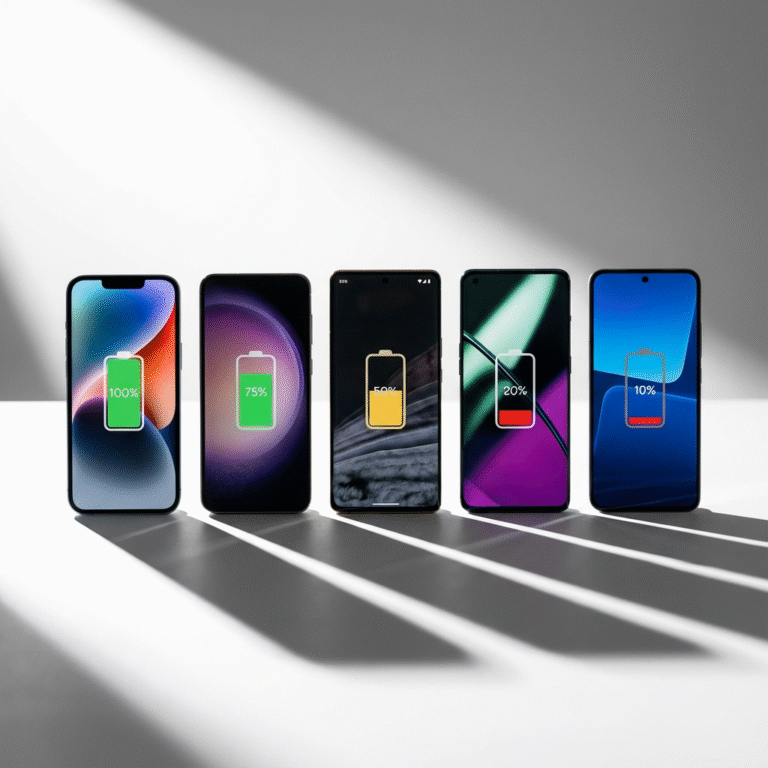
Battery performance is crucial for budget phones since users in this segment often can’t afford to replace devices frequently. Itel phones come with decent battery capacities (4000-5000mAh) but lack fast charging technology, typically maxing out at 10W charging. This means you’ll need to plug in for several hours to fully charge the device.
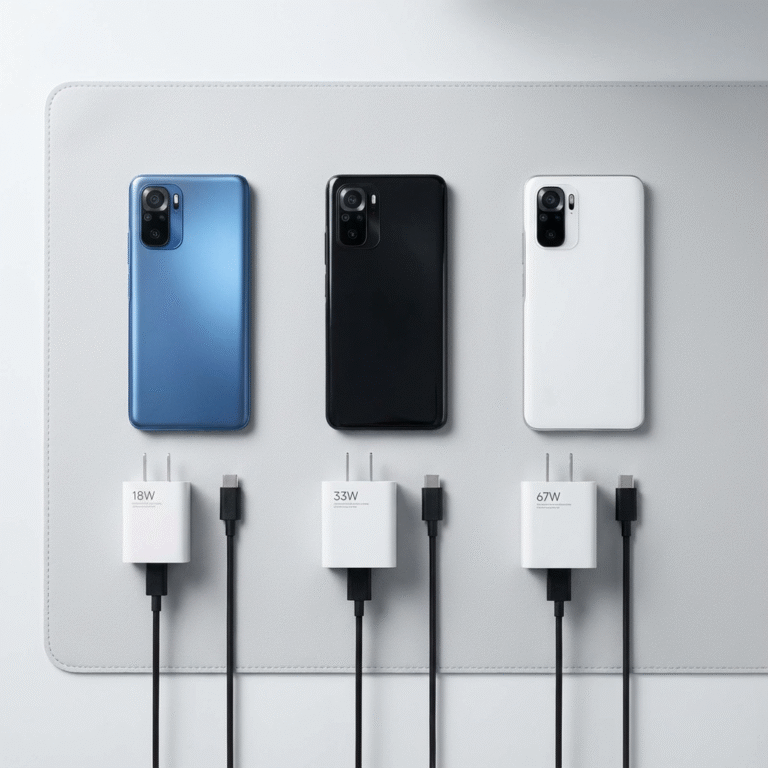
Tecno strikes a better balance with larger batteries (5000-6000mAh) and faster charging speeds, often supporting 18W or 25W fast charging. This combination ensures all-day battery life with the convenience of quicker top-ups when needed.
Infinix pushes boundaries here too, with many models featuring massive 5000-6000mAh batteries paired with 33W or even 45W fast charging. Some premium Infinix models can charge from 0 to 100% in under an hour, a feature that was unthinkable in budget phones just a few years ago.
Which Brand Should You Choose?
The answer depends entirely on your needs and budget. Choose Itel if you’re looking for the absolute most affordable option and only need basic smartphone functionality. Itel is perfect for parents buying their child’s first phone, seniors who want something simple, or anyone needing a reliable backup device. Don’t expect high performance or advanced features, but you’ll get solid reliability for essential tasks.
Opt for Tecno if you want the best overall value. Tecno represents the sweet spot for most budget-conscious consumers, offering good performance, decent cameras, and reliable battery life without breaking the bank. It’s ideal for students, young professionals, and anyone who needs a capable daily driver that won’t cause compromises in everyday usage.
Select Infinix if you want the best specifications possible while staying within a budget. Infinix is perfect for mobile gamers, photography enthusiasts, and tech-savvy consumers who refuse to compromise on features. You’ll get performance and capabilities that punch well above the price point, though you’ll pay a premium compared to Itel and Tecno.

The Verdict
All three brands deliver excellent value in their respective segments, which is why Transsion Holdings has become one of the world’s largest smartphone manufacturers despite limited brand recognition in the US. The key is understanding which tier matches your needs and budget.
If you’re upgrading from a basic feature phone or need the cheapest option possible, Itel won’t disappoint. If you want a well-rounded device that handles most tasks competently, Tecno is your best bet. And if you’re willing to stretch your budget for better performance and features, Infinix delivers impressive specifications that challenge more expensive competitors.
Ultimately, all three brands prove that you don’t need to spend flagship prices to get a capable, reliable smartphone in 2025. The budget segment has never been more competitive, and consumers are the real winners.